Get Your Priorities Right
Return From Exile: Zechariah 7.

After Zechariah’s visions, which were filled with hope and comfort for the future, we come to chapter seven, where the nation’s behavior and mindset are rebuked.
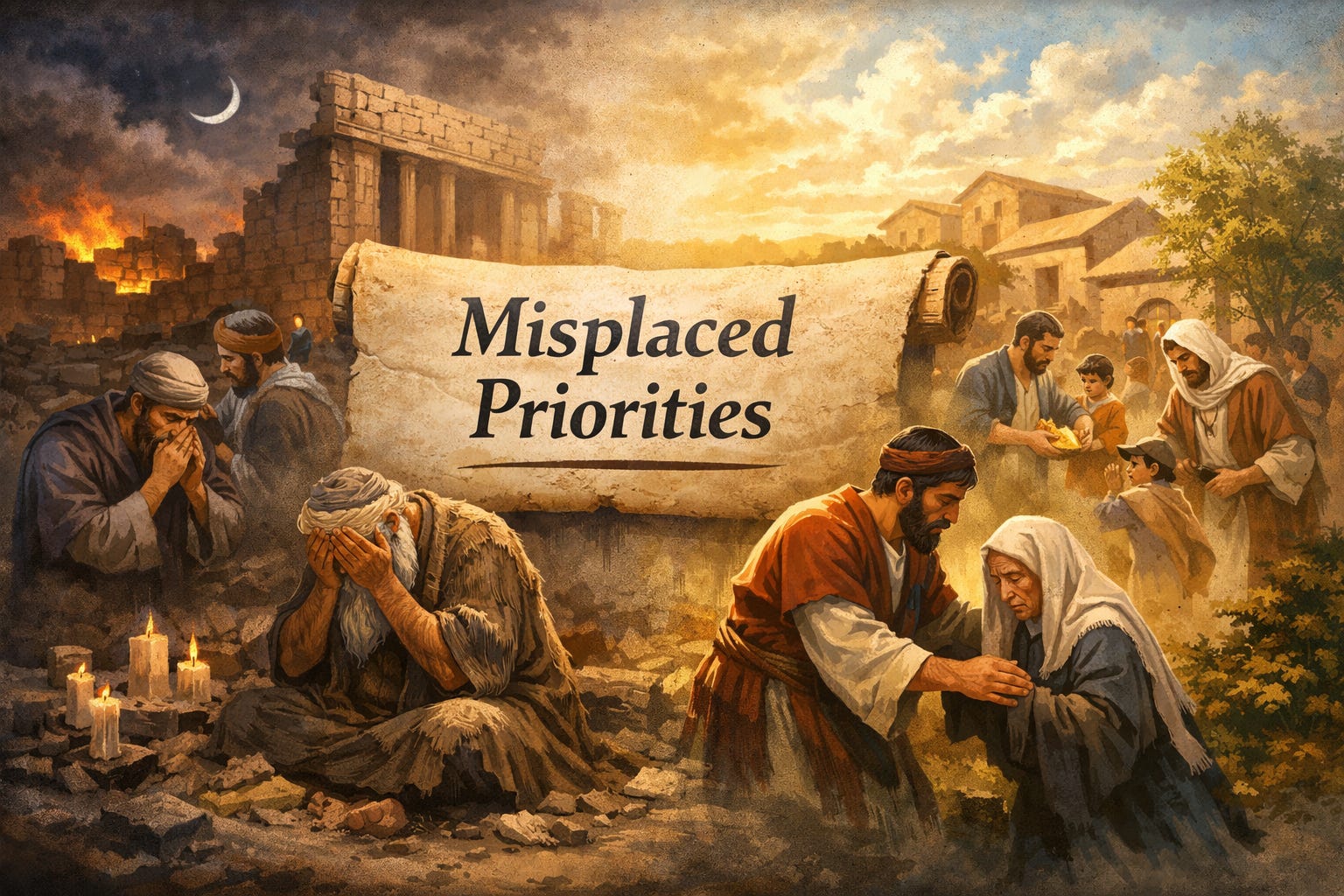
Just like many today, the Jewish people struggled with “majoring in minors, and minoring in majors.” They gave a tremendous amount of thought and effort to things that just weren’t a big deal in the grand scheme of things. But they all too often overlooked matters that were a huge deal.
In Zechariah 7, God addresses the Jewish people’s misplaced priorities.
A Question About Fasting
Now in the fourth year of King Darius it came to pass that the word of the LORD came to Zechariah, on the fourth day of the ninth month, Chislev, when the people sent Sherezer, with Regem-Melech and his men, to the house of God, to pray before the LORD, and to ask the priests who were in the house of the LORD of hosts, and the prophets, saying, “Should I weep in the fifth month and fast as I have done for so many years?” (Zechariah 7:1-3)
The ninth month (Chislev) corresponds with our months of November/December. This question about fasting occurs two years after Zechariah’s visions and two years before the temple is completed (Ezra 6:14-15).
The people sent several men to pray and ask the priests whether they should continue their mourning and fasting during the fifth month (our July/August) as they had done throughout captivity. During the Babylonian exile, the Jews established several days of fasting and mourning over the events that had befallen them. In the fifth month, the Jews held a fast on the tenth day to remember the destruction of the temple in Jerusalem (2 Kings 25:8-9; Jeremiah 52:12-13). They also held other fasts throughout the year, which included:
A fast in the fourth month to mourn when Nebuchadnezzar breached the walls of Jerusalem (Jeremiah 52:6-7).
A fast in the tenth month when Nebuchadnezzar’s siege of Jerusalem began (2 Kings 25:1; Jeremiah 52:4; Zechariah 8:18-19).
Now that they were back from captivity and reconstruction of the temple had begun, the people were wondering if they should continue mourning the temple’s destruction at the hands of Nebuchadnezzar.
God’s Response
Then the word of the LORD of hosts came to me, saying, “Say to all the people of the land, and to the priests: ‘When you fasted and mourned in the fifth and seventh months during those seventy years, did you really fast for Me—for Me? When you eat and when you drink, do you not eat and drink for yourselves? Should you not have obeyed the words which the LORD proclaimed through the former prophets when Jerusalem and the cities around it were inhabited and prosperous, and the South and the Lowland were inhabited?’ “ (Zechariah 7:4-7)
The LORD’s response through His prophet Zechariah doesn’t directly answer the people’s question about fasting. Instead, the LORD addresses the reason for their fasting. When they did all those fasts throughout the year, God says it wasn’t really for Him - it was for themselves.
“The days of fasting were merely exercises in recalling their past calamities…Their emphases were on the physical losses (Jerusalem and the temple) instead of the spirit (worship to their God)” (Billingsley, Truth Commentaries: Zechariah, 376).
Homer Hailey adds that these fasts “had grown out of their own self-pity rather than from a consciousness of sin” (Hailey, A Commentary on the Minor Prophets, 356).
God commanded a fast for the Day of Atonement (Leviticus 23:27), but these fasts were not something God commanded them to do. The people were concerned with fasts that God had not commanded, when they should have been concerned with obeying the things God had actually commanded. I don’t think God is saying it was wrong for them to have these fasts, but He is addressing their misplaced focus when they fasted.
He calls attention to the fact that they had disobeyed the LORD’s word through His prophets, and that’s why they went into captivity, and Jerusalem and the temple were destroyed. Had they obeyed, none of that would have happened.
Their fasting wasn’t about mourning their sin and rejection of God’s word. They mourned what they had lost - land, houses, wealth, their nation, the temple, etc. Not enough Jews mourned their sin as Daniel had done (Daniel 9:4-10).
Godly sorrow produces repentance (2 Corinthians 7:10), but this was not a “godly sorrow,” this was a “woe is me” self-pitying sorrow.
The Behavior God Wanted
Then the word of the LORD came to Zechariah, saying, “Thus says the LORD of hosts: ‘Execute true justice, Show mercy and compassion Everyone to his brother. Do not oppress the widow or the fatherless, The [foreigner] or the poor. Let none of you plan evil in his heart Against his brother.’ But they refused to heed, shrugged their shoulders, and stopped their ears so that they could not hear. Yes, they made their hearts like flint, refusing to hear the law and the words which the LORD of hosts had sent by His Spirit through the former prophets. Thus great wrath came from the LORD of hosts. Therefore it happened, that just as He proclaimed and they would not hear, so they called out and I would not listen,” says the LORD of hosts.
“But I scattered them with a whirlwind among all the nations which they had not known. Thus the land became desolate after them, so that no one passed through or returned; for they made the pleasant land desolate.” (Zechariah 7:8-14)
The same message that was given through the prophets to their forefathers (Amos 5:14-15; Hosea 4:1-2; Isaiah 1:16-17, 23; 10:2; Ezekiel 22:6-12) is given to this generation through Zechariah. God desired them to do what was right (Jeremiah 7:5; Ezekiel 18:8-9; Micah 6:8) by showing mercy and compassion (Hosea 6:6) to their fellow countrymen, the widow, orphans, foreigners, and the poor (Jeremiah 7:6). James reminds Christians that this sort of behavior is still the sort of “religion” God wants (James 1:27). God also told them not to “plan evil” in their mind against their brother (Isaiah 32:7; Micah 2:1)
Their forefathers had stubbornly refused to listen to God’s word through His prophets. They were like an ox that shrugged off God’s yoke. They were like rebellious children who stopped up their ears so they couldn’t hear God’s commands (Isaiah 6:9-10; Jeremiah 7:26). They made their hearts as hard as stone (Ezekiel 3:9). They refused to listen to God’s word given by His Spirit through His prophets (Nehemiah 9:30).
And so, God’s wrath with their sin fell upon them. Since they did not listen to God’s pleadings with them, He did not listen when they pleaded with Him on the day of judgment for their wickedness (Isaiah 1:15; 59:2; Jeremiah 7:16; 11:14; Ezekiel 8:18). Since the days of Moses, the Lord had warned them of this day (Deuteronomy 4:27; 28:64).
The resulting destruction of Jerusalem and the temple and their captivity among the nations was because they sinned and refused to listen to God and repent. This should have been the reason for the Jews’ fasting and mourning during captivity, and not simply because they had lost their home.
They should have been more concerned with the cause of their situation, rather than merely mourning its difficulties.
“This places on the shoulders of the people the responsibility for the land’s desolation. Jehovah had further fulfilled His word by bringing back the aforepromised remnant. Therefore, why fast over Jerusalem’s destruction? Instead, do the will of Jehovah, which is what He has always wanted.” (Hailey, A Commentary on the Minor Prophets, 359)
Previous Posts in the Return from Exile Series